
Papaya is among the most commonly grown fruit in India because of its nutritional value as well as its medicinal benefits. From helping digestion to increasing the immune system, it is an integral part of many Indian household. But when it comes to cultivating some of the frequent gardening and farming questions concerns: How to identify the male and female papaya seeds?
This confusion occurs because papayas can be dioecious (separate male and female plants) and, sometimes, hermaphroditic (both roles in one). For the production of fruit female or hermaphrodite plants are necessary, while male plants can only produce pollen, and do not produce fruit. Knowing the type of seed at an early stage will help save time and energy for farmers.
Why the Difference Matters
- Male Papaya Plants produce only pollen, not fruits.
- Papaya female plants produce fruits but only when pollinated by males or a hermaphrodite.
- Hermaphrodite Papaya Plants produce fruits by themselves and are the most popular choice for commercial agriculture.
If a farmer is unaware of planting additional male papaya seedlings than he intends to, the yields are extremely poor. So, knowing the seed’s type prior to sowing is considered an important skill.
Physical Differences in Papaya Seeds
While there isn’t a absolute scientifically proven method to identify between male papaya seeds from female just by just looking at them the conventional Indian farmers have for years observed specific differences.
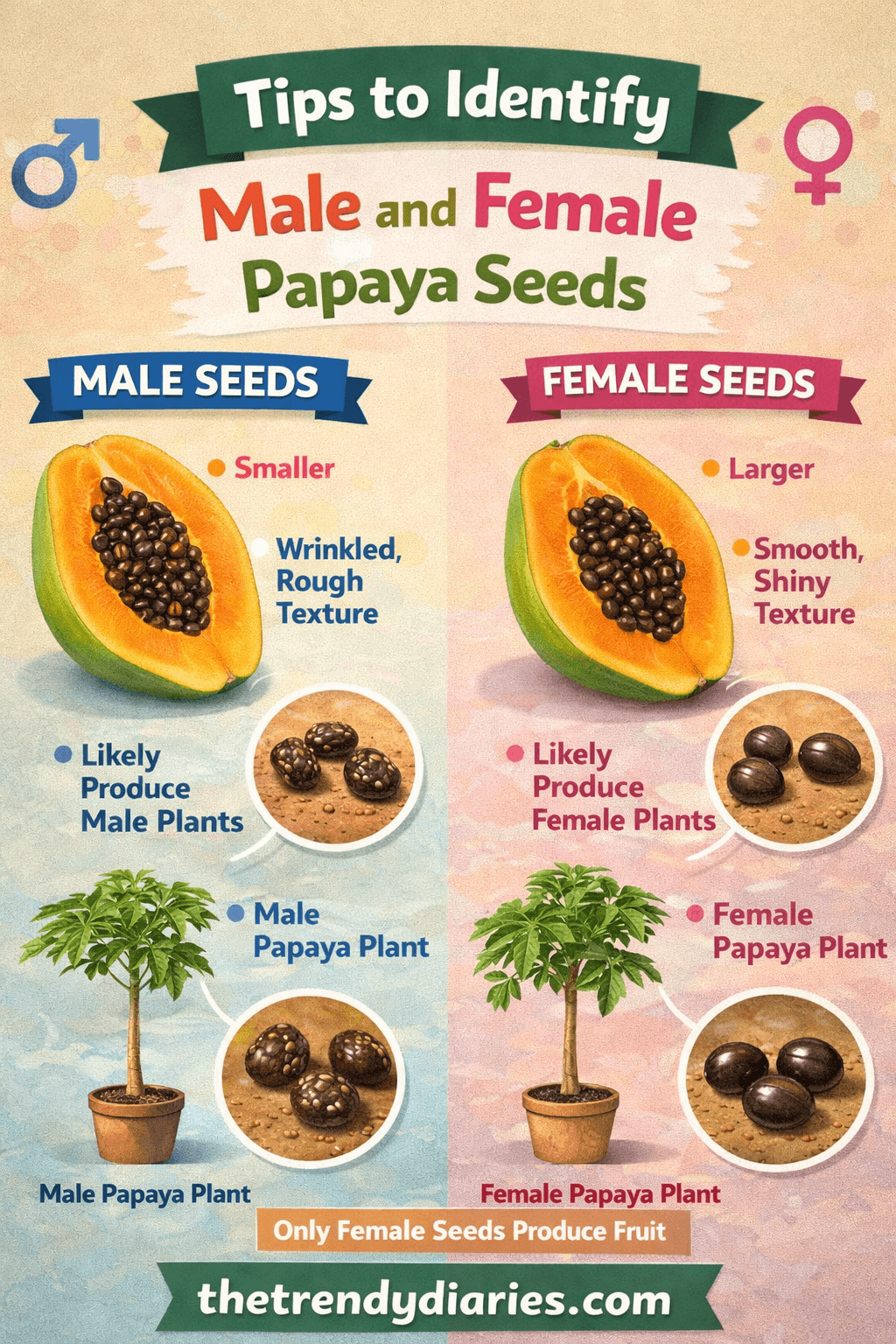
1. Shape of the Seed
- Male Papaya Seeds Are often thought to be larger or thinner, they are also known as oval-shaped..
- female Papaya Seeds typically larger, rounder, and more full in appearance.
They believe that a larger seed will develop into a fruit-bearing plant.
2. Surface Texture
- Male Seeds A little more rough or shiny when compared to other seeds.
- Female Seeds appear cleaner and more shiny.
3. Size of the Seed
- Male Seeds are lighter and smaller.
- Female Seeds: Bigger and heavier and able to store more energy that can be used to grow into fruit-bearing trees.
Traditional Indian Methods of Identification
Beyond the physical characteristics, farmers employ local methods to determine the gender of the papaya seeds:
1. Water Test
- Place papaya seeds in water.
- Male Seeds: Float more frequently due to their lighter weight.
- Female seeds The seed will sink to bottom which indicates more fruit bearing potential and better germination.
While it’s not scientifically verified Many farmers swear by this test.
2. Ash or Soil Germination Method
Farmers may are able to plant seeds with small numbers.
- If the plant is growing quickly but appears weaker typically, it’s male.
- Plants that are a little slower but stronger are considered to be female or hermaphrodite.
Scientific Reality
It is crucial to remember that the distinction between sexes in papaya is purely genetic and real identification generally occurs after the plant has begun to flower:
- Male Papaya Plant produces clusters of tiny flowers on long stalks.
- Female Papaya Plant produces larger flowers, close in relation to its stem.
- Hermaphrodite plant is a bisexual flowering plant that have stamens and pistils.
So, even though appearance of the seed can give clues, accurate identification happens only after the plants mature and start to bloom.
Why Farmers Prefer Hermaphrodite Seeds
In modern times, new hybrid varieties are being developed which are mostly hermaphroditic. They are self-pollinating, and have a large yields of fruit. Farmers frequently purchase organic hybrid seeds from nurseries in order to avoid the male and female. female seed issue completely.
Conclusion
The process of identifying the male or female seeds of papaya an amalgamation of old-fashioned wisdom and observations. Farmers typically differentiate between male and female seeds based on shape, size and the weight in the seed female seeds being more round bigger, heavier, and larger. Tests similar to those using the technique of water are also utilized in rural areas. However the most reliable way to determine who is in charge remains when the papaya flower.
To ensure commercial success, it’s always recommended to select the hybrid and hermaphrodite seed from reliable sources. This will reduce the possibility of having an excessive amount of male plants that do not bear fruit.
While traditional methods can help you to identify the papaya seeds However, research shows us that nature usually reveals its secrets only over the passage of time.