
A peacock’s feather is a symbol of devotion in Indian culture for a long time. It is considered to be as a symbol of elegance, beauty and divinity and is firmly connected to Lord Krishna who is frequently depicted as wearing a feather in his crown. True peacock feathers aren’t just stunning visually, but they can also be believed to have spiritual significance. They bring peace, energy, and security to your home.
Due to the increasing demand, the market is flooded with fake or artificial peacock feathers constructed out of dyed fabrics, plastic or synthetic materials. They may appear attractive however they don’t have the authentic charm and features of the original. To guarantee authenticity, you must be aware of the difference between the original feathers of the peacock.
How to Identify Original Peacock Feather
Observe the Natural Colors
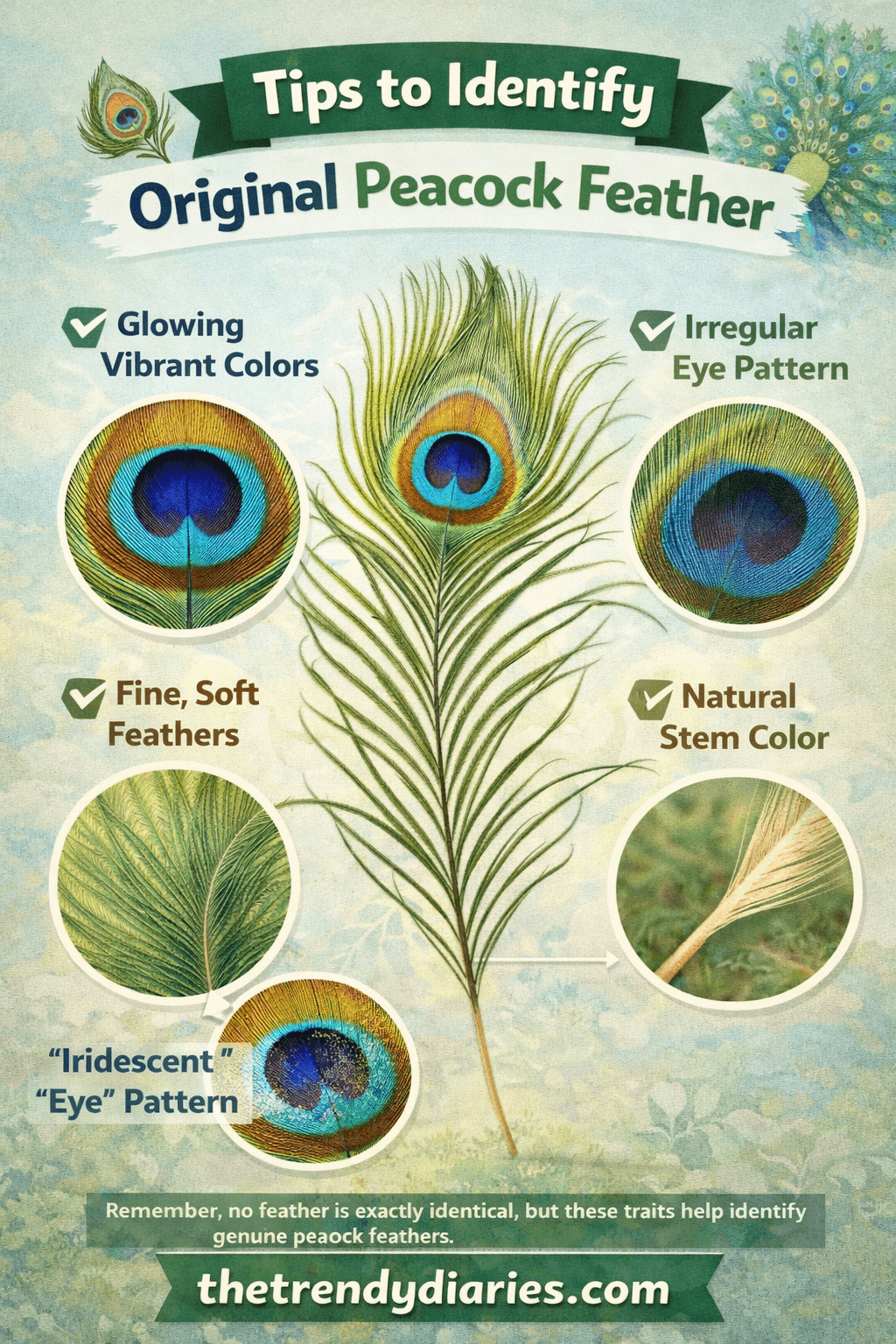
The most striking aspect of a peacock’s feather is its shimmering color pattern and the well-known “eye” design that is located at the tips. True feathers show the natural hues of green, blue, and golden shades which change little when seen from various angles. Fake feathers are often painted or artificial dyes, giving their feathers a dull or bright look without any natural change in color.
Check the Texture
The original feathers of the peacock have a natural luster and are soft and soft to the feel. The tiny hairs (called barbs) are flexible and move naturally as you place your hand on the feathers. False feathers, however can appear stiff, plasticky or rough because they’re typically made from plastic or synthetic fibers.
Look at the Eye Pattern
The eye-shaped design on the tip of the feather is the most prominent portion of a feather. In real feathers they have a well-defined circle and symmetrical. It also has an ethereal shine. The eye’s colors appear to be layered with deep blue in the center, surrounded by shades of bronze and turquoise. False feathers are often spotted with unbalanced, poorly painted as well as eye-shaped designs printed on paper that aren’t clear and shine.
Smell Test
Because the feathers originate of birds, the feathers can have a smoky earthy or natural scent. Synthetic feathers typically contain an smell that is plastic or chemical because of synthetic dyes and substances used in the production of.
Flexibility Test
Feathers of Peacocks naturally lightweight and pliable. They can be bent gently and they’ll be able to return to their original form with no breakage. Artificial feathers are either too stiff (if made from plastic) or they are too fragile (if constructed from cloth of low quality).
Stem Examination
The stem (also known as rachis) of a genuine feather can be described as thin and hollow and smooth. It is natural brown shade and is light. False feathers typically come with large and heavy stems that appear strangely shiny.
Price and Source
Genuine peacock feathers aren’t costly However, they are not offered at a bargain. If you come across a vendor selling a lot of feathers at low cost, it’s probably fake. Be sure to purchase from trustworthy spiritual shops or handicraft shops, or online platforms that are reputable to make sure you’re buying genuine feathers.
Legal Note
In India killing or shooting of peacocks is a crime since the peacock is considered to be the the national bird in India. However, the collecting of natural shed feathers is legal. True sellers source their feathers with integrity, while false sellers might not reveal the source at all.
Conclusion
The process of identifying a genuine peacock feather is about looking at its color the texture, design of the eye and flexibility as well as the quality of the stem. Genuine feathers naturally shimmer, smooth, and exquisitely designed, whereas fake feathers typically look stiff, artificial or bright.
When purchasing, make sure to choose trustworthy and ethical suppliers for authentic peacock feathers aren’t only beautiful, they also represent symbolic meaning in Indian cultural. True feathers can be a source of joy, a smile and a hint of culture into your living space.