
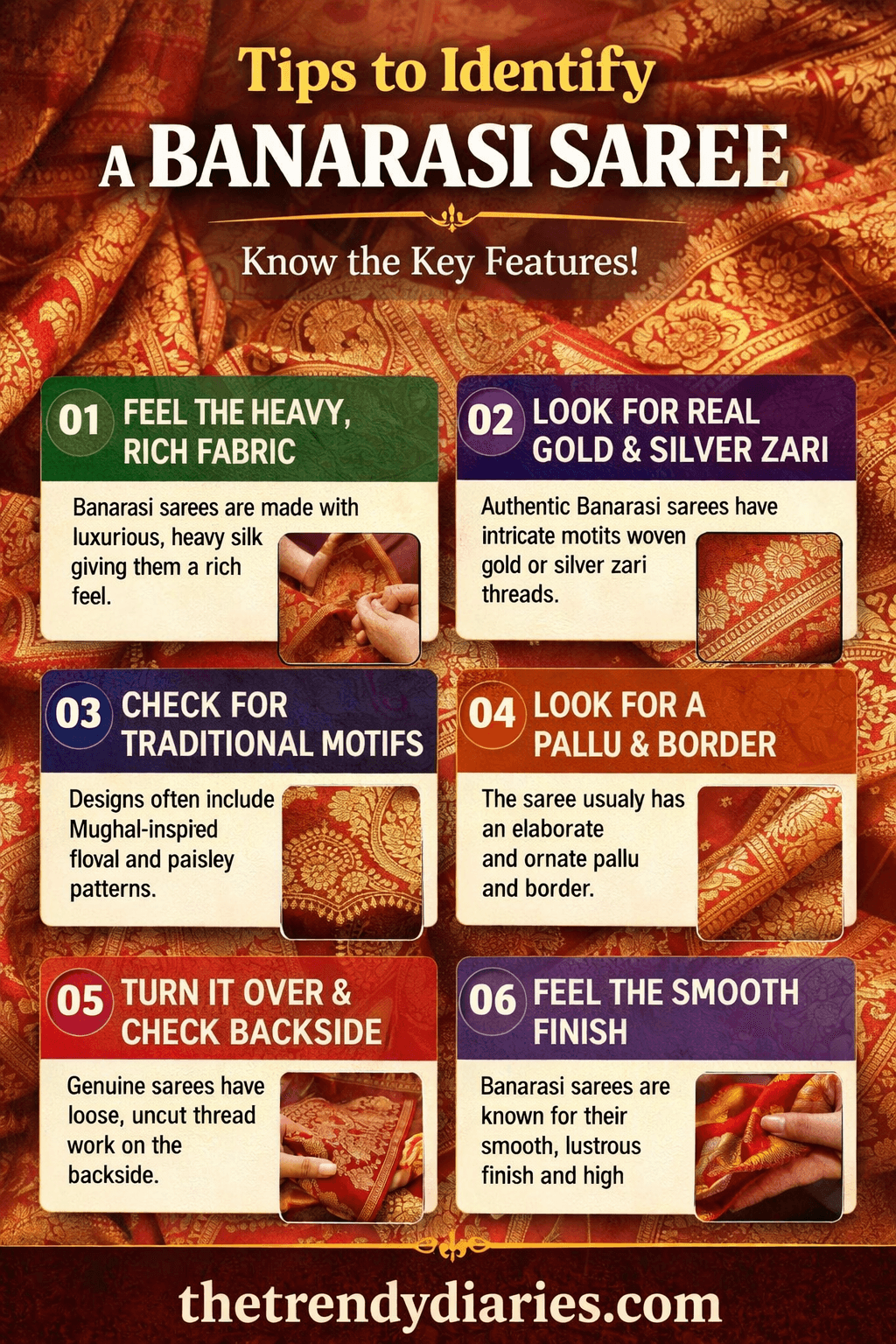
It is said that the Banarasi Saree is among the most sought-after and traditional weaves. It comes of Varanasi (Banaras), Uttar Pradesh. It is renowned for its silky intricate zari work and timeless elegance the Banarasi saree is usually considered an ancestral heirloom of the family and is a must for festivals and weddings. However, today’s market is overflowing with replicas manufactured by machines which look the same, but don’t have the heft quality, durability, and beauty of a genuine Banarasi saree. If you want to be a smart purchaser it’s essential to be able to Identify a original Banarasi Saree.
Why Banarasi Sarees are Special
- Handwoven Masterpieces Each saree can take between 15 days up to 6 months for weaving based on the pattern.
- Royal Heritage It was a traditional dress worn by Mughal royals and Indian brides.
- Unusual Weaving Style Utilizes silk in its purest form and Zari (gold/silver thread) with traditional designs in the form of temples, nature as well as Mughal art.
Key Ways to Identify a Real Banarasi Saree
1. Check the Weaving Technique
- Then flip the saree upside down and take a look at the reverse.
- A genuine Banarasi saree is likely to include threads floating (loose threads) behind the designs that show handloom work.
- Machine-made imitations typically feature the appearance of a smooth back and no thread floating.
2. Look for the GI Tag or Silk Mark
- Genuine Banarasi Saris are marked with the Geographical Indication (GI) tag and, in most cases, they are tagged with a silk Mark tag given through the Government of India.
- If it is missing, be careful as it might not be authentic.
3. Examine the Zari Work
- Traditional Banarasi sarees are made using zari out of silver or gold-coated thread on silk.
- The shimmer is soft, deep and lasting.
- Fake sarees make use of synthetic or metallic threads that appear shiny and quickly fade.
4. Identify Traditional Motifs
- Common motifs include:
- Kalga as well as Bel (floral pattern)
- Paisley designs
- Jhallar (a sequence of leaves on the edge)
- Butidar motif (small designs that are everywhere)
- Genuine sarees feature intricate and delicate designs that are not printed or rough weaved ones.
5. Texture and Weight
- Real Banarasi sarees made out of the finest silk and are generally heavier because of the Zari work.
- Fake ones made from polyester or mixed fabrics are light and supple.
6. Pallu and Border Detailing
- The pallu (end piece) of a real Banarasi Sari is beautiful and lavishly embellished.
- The border typically has continuous, intricate weaving and is different from embroidery printed on duplicates.
7. It is a burn Test to test Fabric (with being cautious)
- If you have the ability to try a tiny thread, make sure you burn it with care.
- Silk pure smells of burnt hair. It also leaves black white ash.
- Synthetic fabrics smell of burned plastic and creates an extremely hard bead.
Common Types of Banarasi Sarees
- Katan Banarasi Silk pure with intricate designs.
- Organza (Kora) with Zari: Lightweight with Zari-inspired motif.
- Georgette Banarasi Elegant fabric, with fine embroidery.
- Shattir The Shattir brand is known for unique designs, original patterns.
Tips for Buyers
- Always purchase only from trusted shops or handloom shops.
- Do not fall for cheap costs — authentic Banarasi sarees cost a lot due to their craftsmanship.
- Ask the seller for the weaving time and silk mark certification and the zari type.
Final Thoughts
A Banarasi saree’s not only a piece of clothing, but an inheritance handed through generations. To be sure you have authentic pieces of Indian tradition, pay close careful attention to the weave such as zari quality, patterns and the certification. Although sarees made by machines may appear like the originals, the quality of the craftsmanship, beauty, and elegance of a genuine Banarasi saree is unmatched. If you are wearing a genuine Banarasi saree, you are carrying the Varanasi’s cultural heritage with confidence.